

Running a martial arts school is about way more than teaching kicks and punches. We've all seen it - students who start strong but slowly fade away. The secret to keeping them engaged? Building a real community that makes people want to stick around.
Let's dive into ten proven strategies that'll transform your school from just another training spot into a place students genuinely love being part of.
1. Create a Clear Vision Everyone Can Rally Behind
Your school needs a mission that goes deeper than "learn martial arts." You're all about building kids' confidence or creating a supportive space for adults to get fit and stress-free. Whatever it is, make sure everyone knows what you stand for.
When students understand the bigger picture, they're not only learning techniques - they're part of something meaningful. Post your mission in a visible place and reference it regularly. Students should be able to explain why your school is special, not just what you teach.

2. Master the Art of Making Everyone Feel Welcome
This one's huge. We've all walked into places where we felt like outsiders immediately. Don't let that happen in your school. Create systems that make new students feel included from day one.
Set up different class levels or intro sessions so beginners aren't thrown in with black belts right away. Have clear progression paths so people know what comes next. When someone new walks through your doors, they should immediately sense this is a place where they belong, regardless of their current skill level.
3. Start a Buddy System That Actually Works
Pair up experienced students with newcomers for their first month or two. This isn't just about showing them where the bathroom is - it's about creating genuine connections that keep people coming back.
Your experienced students get to feel important and helpful, while newcomers have a familiar face to look for in class. These mentor-mentee relationships often turn into lasting friendships that extend way beyond training time. Win-win all around.
4. Host Events That Build Real Connections
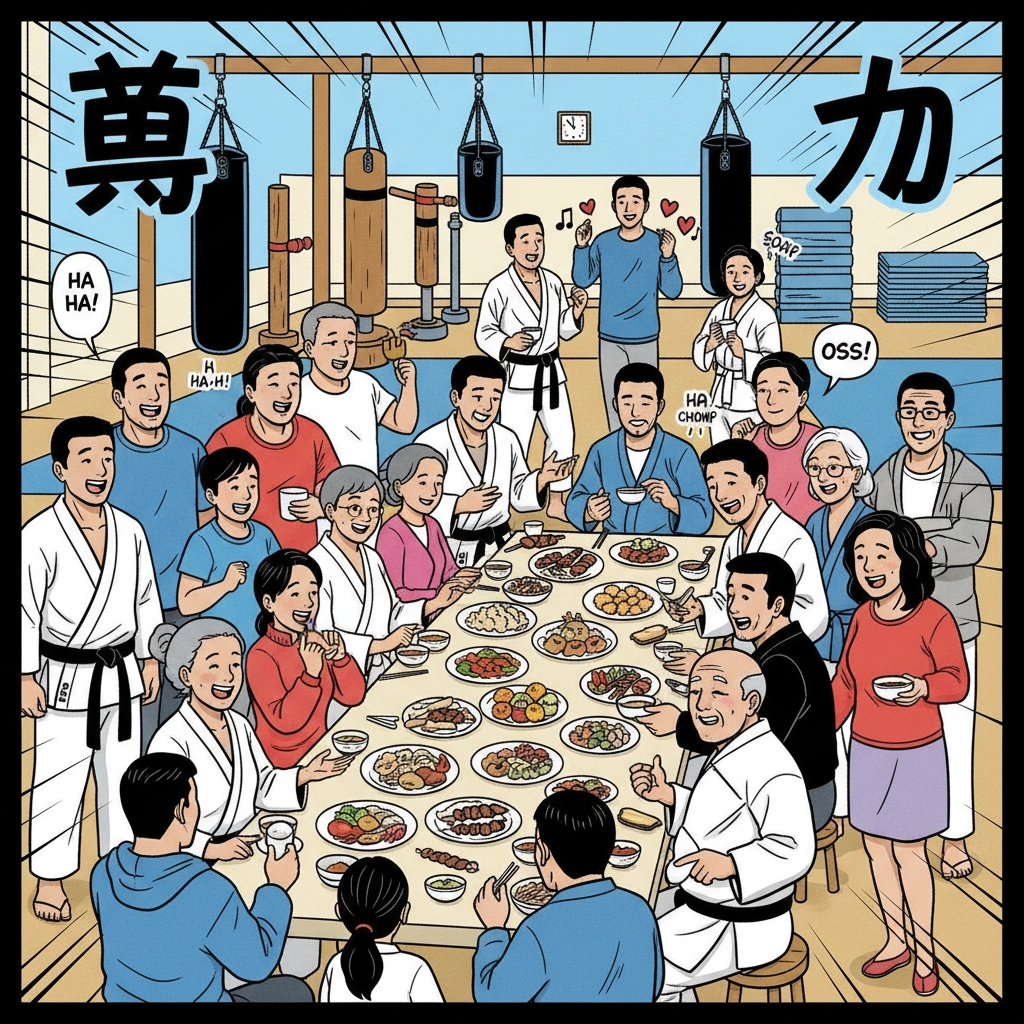
Regular classes are great, but special events are where the magic happens. We're talking friendly competitions, belt promotion celebrations, movie nights, barbecues, or even just pizza after a hard training session.
Mix up the types of events, too. Some people love competing, others prefer social gatherings. Workshops with guest instructors keep things fresh and give everyone something to look forward to. The key is creating opportunities for students to interact outside the formal training environment.
5. Use Social Media to Keep the Community Connected
Your students are already on Facebook and Instagram anyway - meet them there. Share training highlights, celebrate member achievements, and post behind-the-scenes content that makes people feel part of an inside group.
Encourage students to share their own progress and tag your school. When someone lands their first successful technique or earns a new belt, help them celebrate online. This creates a positive feedback loop that keeps engagement high even between classes.
6. Give Your Students Leadership Opportunities
Here's something most schools miss - experienced students want to contribute beyond just showing up for class. Create assistant instructor positions, event planning committees, or community outreach roles.
When students have ownership in your school's success, they become invested in ways that go far beyond their monthly dues. They'll promote your school naturally, help with retention efforts, and stick around longer themselves because they feel genuinely needed.
7. Connect With Your Local Community
Don't exist in isolation. Partner with local schools to offer after-school programs, work with community centers on self-defense workshops, or participate in local health fairs and community events.
This does two things - it brings in new members who see you as part of their community fabric, and it makes existing students proud to be associated with a school that gives back. Students love bragging about being part of something bigger than themselves.
8. Create a Family-Friendly Culture
Even if you don't teach kids' classes, think about how families fit into your community. Can parents watch classes comfortably? Do you have family-friendly events? Are siblings and spouses welcome at celebrations?
When martial arts becomes a family activity rather than something that takes someone away from home, you've got much better retention. Families that train together tend to stay together - at your school.
9. Foster Real Belonging Through Shared Stories
Create spaces where people can share their martial arts journey and personal wins. It could be a bulletin board with student spotlights, or time before class for quick announcements and celebrations.
When students feel comfortable sharing both their struggles and successes, you've built something special. People stick around places where they feel truly known and supported, not just instructed.
10. Keep Learning Fresh and Personal Development Focused
Go beyond physical techniques. Offer workshops on mental toughness, nutrition for athletes, injury prevention, or even meditation and mindfulness. Show students that martial arts is about developing the whole person.
Bring in guest instructors occasionally to share different perspectives. When students see opportunities for continuous growth - not just in fighting skills but in life skills - they stay engaged for the long haul.
Making It All Work Together
Here's the thing - you don't need to implement all ten strategies at once. Pick two or three that resonate most with your current situation and focus on those first. The goal is authentic community building, not checking boxes.
Remember, students today have tons of options for fitness and recreation. They'll choose to stick with places that make them feel valued, supported, and part of something special. Technical instruction is just the baseline - community is what keeps them coming back.
The martial arts schools that thrive long-term aren't necessarily the ones with the fanciest equipment or most decorated instructors. They're the ones where students genuinely enjoy spending time together, where friendships form naturally, and where everyone feels they're working toward something meaningful together.
Start with one strategy that feels right for your school's personality. Build on what works. Before you know it, you'll have created the kind of community that students never want to leave - and that they can't help but recommend to their friends and family.
Your students are investing their time and energy in your school. Make sure they're getting back way more than just martial arts techniques. Give them a community worth being part of, and they'll stick around for years to come.